
Child’s First Year
Developmental Milestones by Month
The first year of life is an exciting time of rapid growth and discovery. Every baby develops on their own timeline, but knowing what skills often emerge in each month can help you understand if your child needs extra support in any particular area of development. Below, we’ve outlined milestones commonly seen from birth to 12 months, organized by area of development. These are general guidelines. Some babies may show skills earlier or later than others. If you have any concerns, we encourage you to reach out to your pediatrician or contact No Limits Pediatric Therapies.
Birth to 2 Months
In these early weeks, your baby is just beginning to experience the world outside the womb. You may notice them starting to move with more control, early reactions to sound and light, and the start of bonding responses.
Language and Communication
- Startles or blinks at loud sounds, indicating basic hearing and alertness
- Makes soft cooing noises in response to comfort
- Watches faces and reacts when spoken to, even if just by widening their eyes
Cognitive
- Watches a toy move slowly from left to right across their field of vision
- Recognizes the sound of a caregiver’s voice
- Stares at familiar shapes or contrasting patterns with clear interest
Movement
- Lifts head briefly while lying on tummy during supervised floor time
- Moves arms and legs in smooth, reflexive motions that help develop coordination
- Brings hands to mouth, an early step toward self-soothing and hand awareness
Social and Emotional
- Begins to smile in response to a caregiver’s voice or face
- Calms when picked up, rocked or spoken to
- Looks at people’s faces during feeding or changing
Feeding
- Sucks and swallows smoothly while nursing or taking a bottle
- Turns head toward the source of food when hungry
- Shows signs of fullness by turning away or closing the mouth
3 to 4 Months
Around this age, babies become more alert, interactive and physically active. You’ll likely see more expression and movement each day.
Language and Communication
- Smiles spontaneously at people and may laugh in response to play
- Begins to babble with vowel-like sounds
- Turns toward voices and sounds
Cognitive
- Brings hands together and stares at them
- Uses their eyes to follow toys or people moving across their view
- Anticipates familiar routines
Movement
- Holds head steady without support when upright
- Pushes chest off the floor with arms during tummy time
- Kicks legs rhythmically when lying on back
Social and Emotional
- Enjoys close contact and may fuss when it ends
- Shows preference for familiar voices or faces
- Imitates facial expressions like smiling or blinking
Feeding
- Shows interest in how others eat by watching their hand movements, utensils and food
- Takes in more milk or formula with fewer pauses, spills or interruptions during feeding
- May begin reaching for bottle or breast
5 to 6 Months
Your baby is growing stronger and more curious. Movement becomes more intentional, and communication starts to include gestures and consistent sounds.
Language and Communication
- Looks toward their name
- Uses repeated sounds like “ba” or “da”
- Reacts to music or speech with excitement
Cognitive
- Reaches for toys and explores with mouth
- Transfers objects between hands
- Reacts when routines are interrupted
Movement
- Rolls from tummy to back with increasing ease
- Pushes up on extended arms during tummy time
- Sits with some support and uses hands to steady
Social and Emotional
- Recognizes familiar people
- Responds to others’ emotions
- Watches faces for social cues
Feeding
- Opens mouth for spoon
- Tolerates smooth purees and begins to move food from front to back of mouth
- Begins sipping from a cup with help
7 to 9 Months
At this stage, babies become more mobile and interactive. They show more emotion and begin solving simple problems through exploration.
Language and Communication
- Uses sounds or gestures to express wants
- Babbles with a mix of consonants and vowels
- Understands simple words like “no” or “bye bye” and may pause or look at you when they hear them
Cognitive
- Begins to understand that objects still exist even when they can’t be seen—for example, they may look for a favorite toy hidden under a blanket or moved out of sight.
- Explores toys by shaking, banging or dropping
- Enjoys cause-and-effect play like dropping a spoon to watch you pick it up
Movement
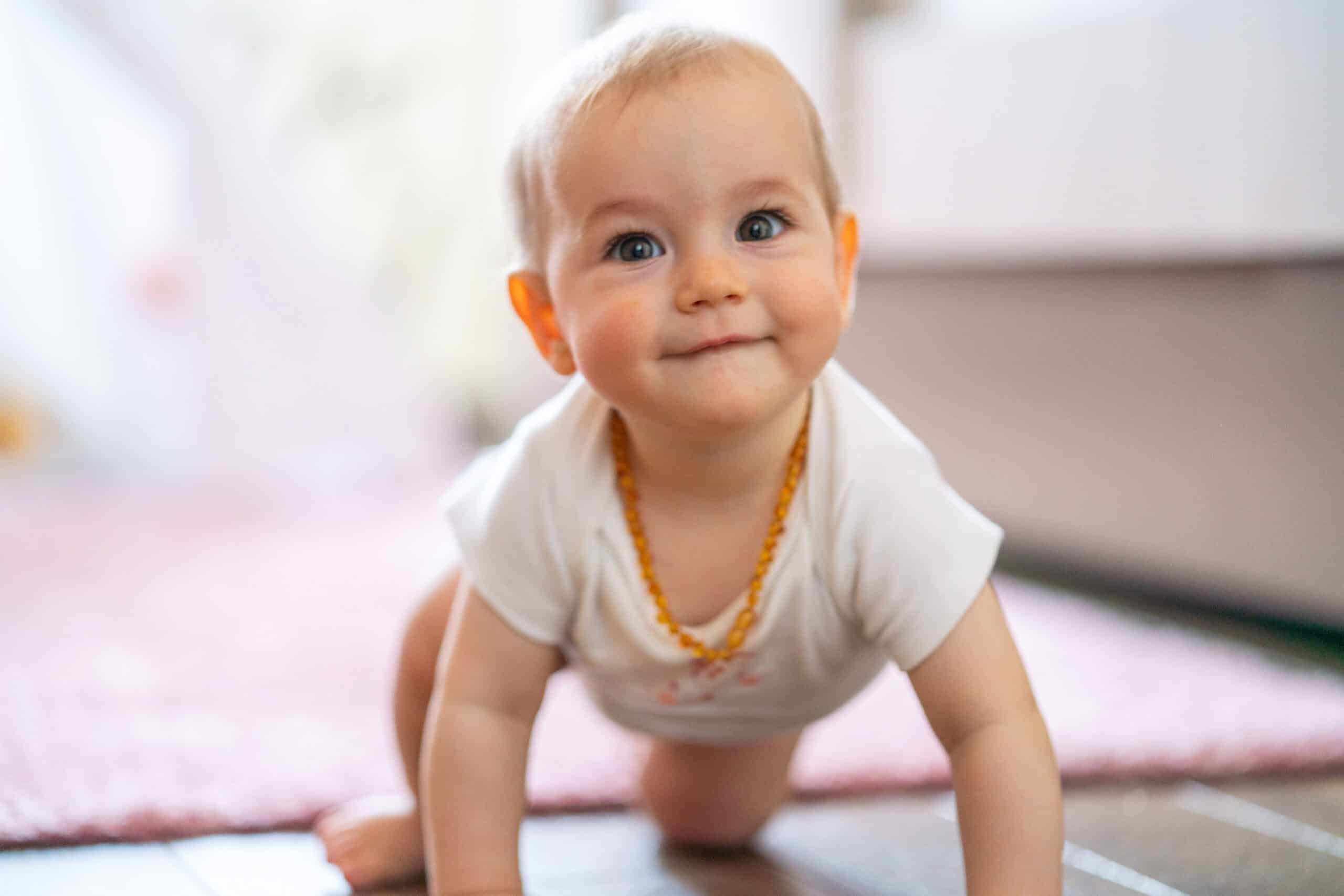
- Sits independently and reaches for toys
- Begins crawling or scooting
- Moves between sitting and lying with increasing control
Social and Emotional
- May act shy or hesitant around unfamiliar people
- Laughs at peek-a-boo and other social games
- Seeks out caregiver for comfort or play
Feeding
- Picks up small pieces of food using fingers
- Eats mashed or chopped soft foods
- Shows interest in feeding self
10 to 12 Months
By the end of their first year, babies may begin standing or walking and using words intentionally. They’re also showing more independence and awareness.
Language and Communication
- Says “mama” or “dada” with meaning
- Points to show interest or request
- Understands and follows simple instructions
Cognitive
- Uses toys intentionally, like pushing buttons or placing items in containers
- Follows simple directions with gestures
- Looks at the correct object when named
Movement
- Pulls to stand using furniture
- Cruises along furniture and may take first steps
- Stands with or without support briefly
Social and Emotional
- Expresses a range of emotions like joy, frustration or concern
- Seeks comfort from familiar people
- Enjoys taking turns or offering toys during play
Feeding
- Begins to chew soft table foods using a basic up-and-down jaw movement, known as a “munching pattern”
- Drinks from a sippy or open cup with help
- Begins to feed self with fingers
Supporting Your Child’s Development at Home
You don’t need special tools to build important skills with your child. Try these activities at home:
- Talk to your baby throughout the day, describing what you’re doing and naming objects around them
- Offer tummy time and floor play daily to strengthen their neck, back and arms
- Introduce safe toys they can reach for and shake to build coordination
- Play simple games like peek-a-boo to encourage interaction and turn-taking
- Provide soft finger foods and allow your baby to try feeding themselves with help
Get a Free, 15-minute Developmental Consultation
If you’re unsure whether your baby is meeting early milestones, reach out to No Limits Pediatric Therapies. We are more than a therapy clinic—we’re a place where families are supported, respected and heard. Whether your child is struggling with feeding, movement, communication or something else entirely, we are here to guide you toward answers. Call (479) 250-9838 or fill out the contact form.